Modernizing Beyond Legacy Web Tools Infrastructure
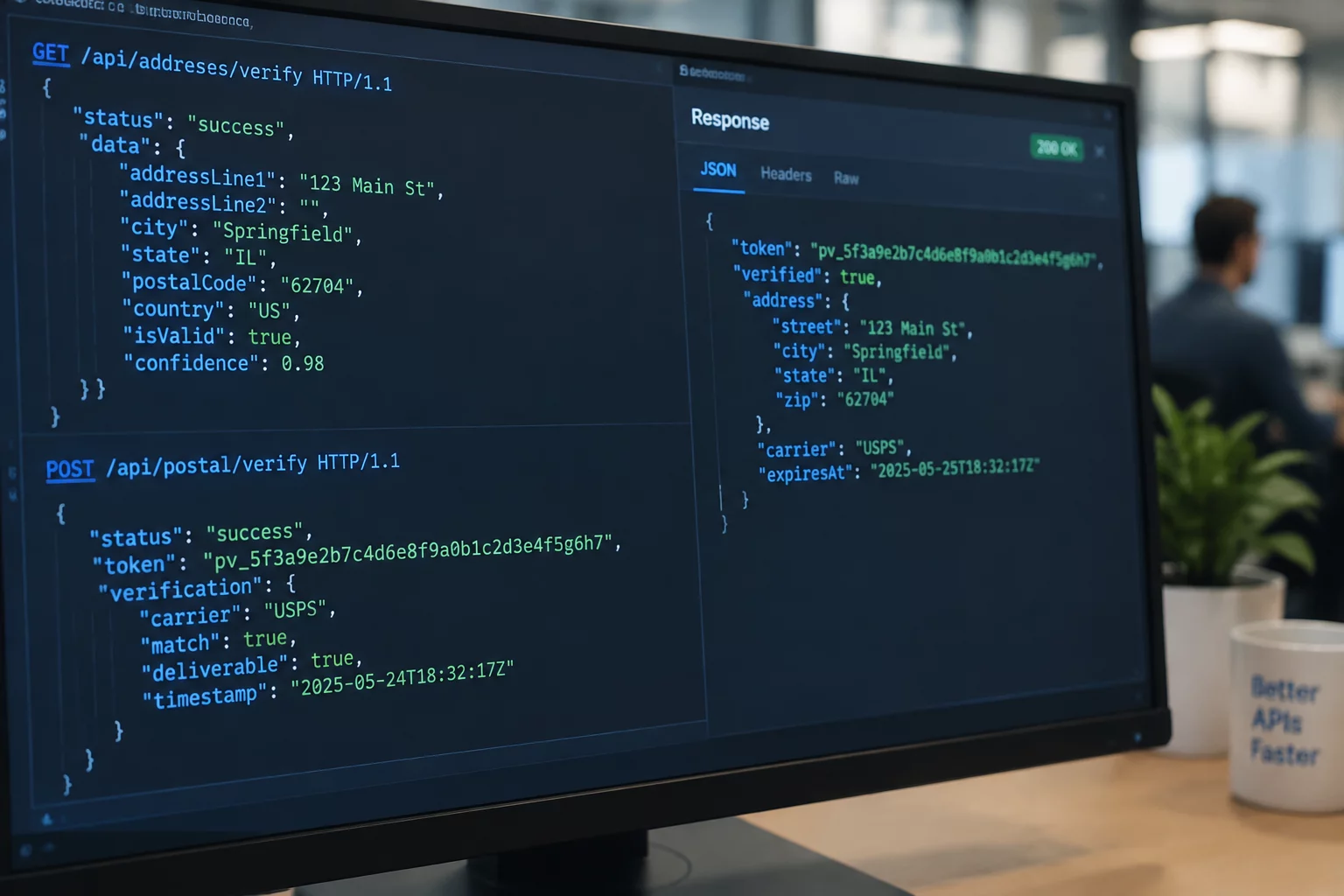
The retirement of legacy USPS Web Tools XML endpoints represents a significant shift for enterprise logistics and mailing platforms. Modern applications interact with the postal authority via the unified Developer Portal, which mandates OAuth 2.0 bearer tokens obtained through client credentials exchange. Rather than passing unencrypted credentials inside XML payloads, modern microservices authenticate against a dedicated token endpoint, receiving temporary access tokens scoped specifically for the Addresses API suite.
The Enhanced Addresses API processes raw postal strings through a multi-tier standardization pipeline. It normalizes street designations, corrects pre-directional misalignments, and matches records against the national Delivery Point Validation (DPV) database. Beyond simple ZIP+4 code assignment, the system validates whether an address represents a physical drop point, detects vacant buildings, and identifies Commercial Mail Receiving Agencies (CMRAs) without relying on heuristic guesswork.
Direct carrier API validation eliminates heuristic guesswork, but enterprise pipelines must engineer resilient token cache layers to survive hourly expiration cycles.— Technical Review Desk
Delivery Point Validation and Route Metadata Precision
Evaluating API performance requires inspecting the granular sub-codes returned in standardized JSON responses. Unlike generic geocoders that interpolate spatial coordinates, the USPS engine returns definitive operational delivery flags that impact postage eligibility and carrier acceptance:
- DPV confirmation indicators differentiate deliverable primary numbers from invalid street ranges, confirmed vacant properties, and unassigned lot numbers.
- Carrier route codes pinpoint exact postal carrier travel segments (such as C004 or R012), enabling sortation discounts and high-density line-of-travel presort.
- Automated LACSLink integration updates rural route records and renamed municipal thoroughfares to current 911-compliant emergency response street names.
Operational architectures must accommodate strict rate limitations and token expiration windows. Production deployments require persistent Redis or in-memory caches to reuse access tokens until near-expiration, avoiding unnecessary authentication overhead during bulk verification sweeps. By catching malformed units, invalid street numbers, and vacant drop locations at the API boundary, shipping systems systematically eliminate downstream carrier address correction surcharges.