Ingestion Mechanics and Document Freshness Heuristics
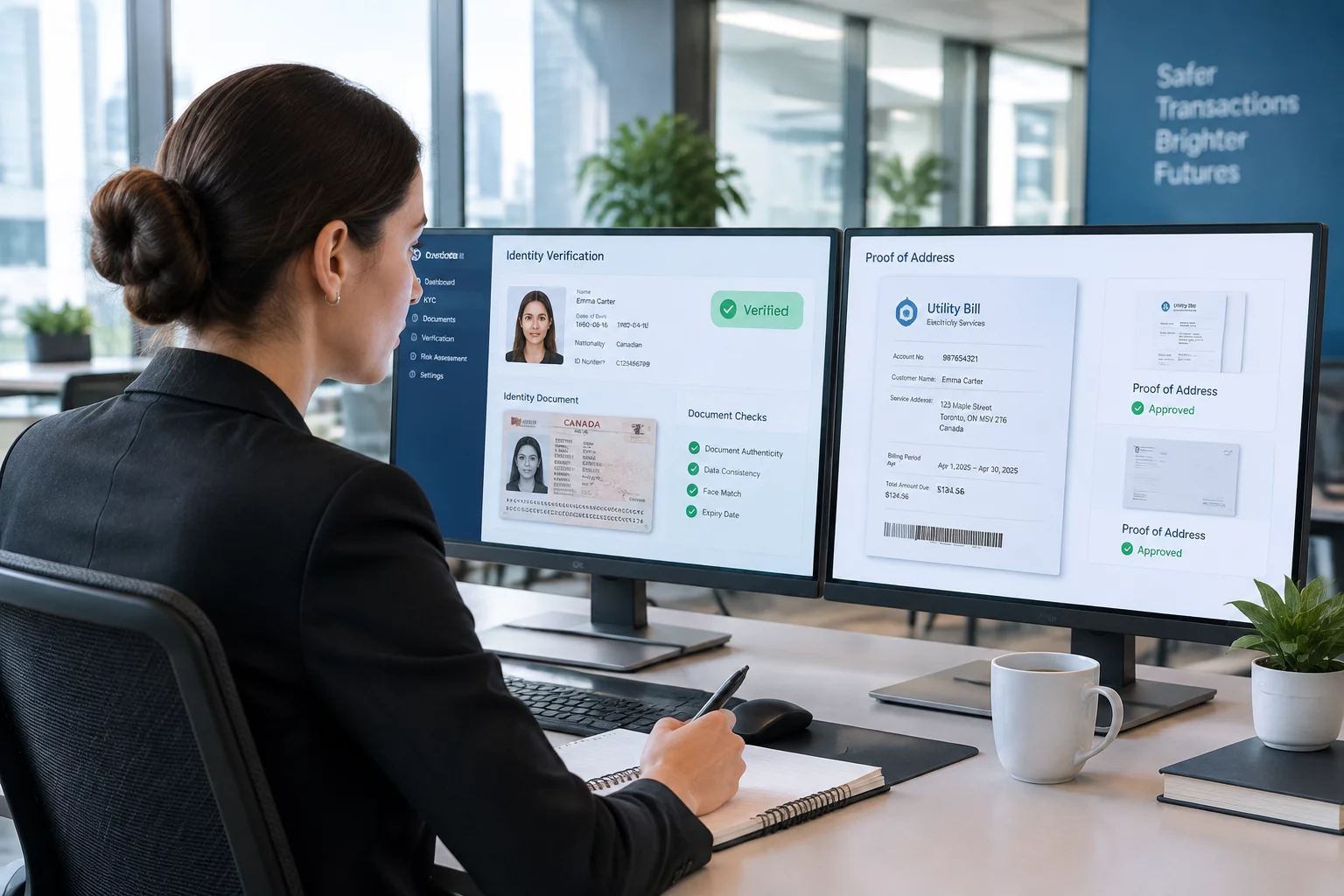
Address verification in financial onboarding demands proof of physical residency rather than deliverability alone. Postal clearinghouses verify that an address exists and receives mail, whereas Veriff answers whether the individual actually occupies that location. The automated proof of address workflow extracts the primary holder name, full physical address, issuing enterprise identifier, and publication date directly from user-uploaded utility bills, local council statements, or bank letters. An optical character recognition model reads multilingual character layouts and automatically structures unstructured lines into standardized street, secondary unit, city, and postal code records.
Document freshness represents a critical hurdle during regulatory audits. Compliance mandates strictly dictate that supporting address records must not exceed a predetermined issuance window, typically ninety days. Veriff flags outdated statements immediately through automated date normalization. The engine handles various international date formatting standards, calculates the elapsed span relative to the verification transaction timestamp, and terminates invalid submissions before human review teams waste operational bandwidth.
Validating deliverability proves a mailbox exists; automated Proof of Address confirms your customer actually resides at that physical coordinate.— Technical Review Desk Architecture Note
Best-Fit Deployments and Operational Fraud Safeguards
Fintech payment networks, digital asset platforms, and cross-border commercial platforms encounter the highest operational risk from fraudulent address submissions. Fraudsters routinely purchase high-resolution templates online to fabricate utility invoices with synthetic recipient details. Veriff combats synthetic record creation through automated digital artifact analysis. The verification pipeline subjects submitted files to deep anti-tampering heuristics that protect financial organizations against regulatory exposure:
- Forensic font kerning analysis identifying text insertions layered on top of scanned utility bill templates.
- Metadata and digital signature inspection alerting risk engines when documents originate from raster image editing tools.
- Deterministic name reconciliation matching secondary address records against verified government photo identification files.
Organizations integrating Veriff alongside standard postal cleansing utilities establish a resilient two-tier data hygiene protocol. Standard postal systems normalize and certify the validity of the mailing destination. Veriff subsequently proves legal association between that verified address record and the onboarding identity. This dual architecture reduces manual review queues by more than eighty percent while safeguarding compliance teams against emerging synthetic identity threats.